Perfumes & essences
The Moroccan art of scents becomes a discipline of formation. The nose, the hand, the memory — from the rose of Kelaât M’Gouna to the still, a craft learned like the others, gesture after gesture.

At the Riad, perfume is not a luxury accessory: it is a craft of precision. Recognising an essence, dosing a blend, knowing the plant before the oil — the same seriousness as for zellige or calligraphy.
Formation unites three gestures: the nose that distinguishes, the hand that distils, the memory that retains. One learns first to smell, then to make.
إِذَا قَامَتَا تَضَوَّعَ الْمِسْكُ مِنْهُمَا
نَسِيمَ الصَّبَا جَاءَتْ بِرَيَّا الْقَرَنْفُلِ
« When they rose, musk exhaled from them — like the eastern breeze laden with the scent of clove. »
— Imruʾ al-Qays, Muʿallaqa
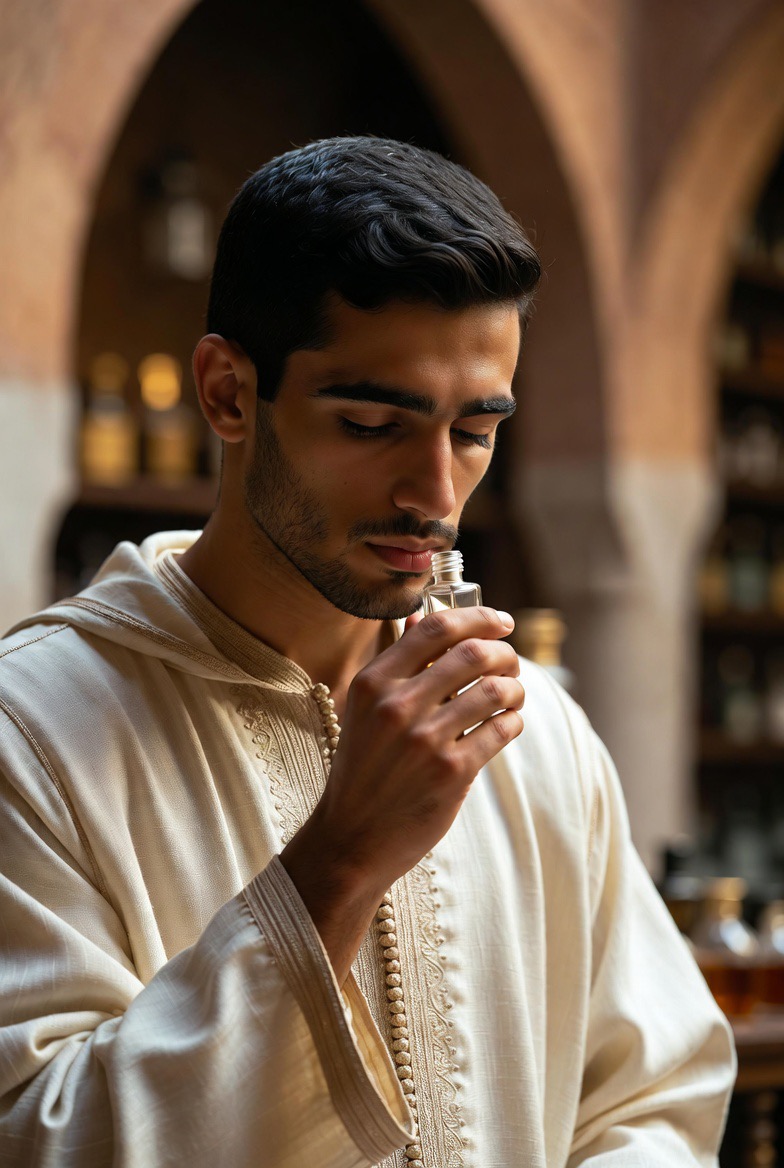
The nose
Recognise, distinguish, memorise essences. Before any composition, the pupil learns to name what he smells — rose, orange blossom, jasmine, wood, resin.
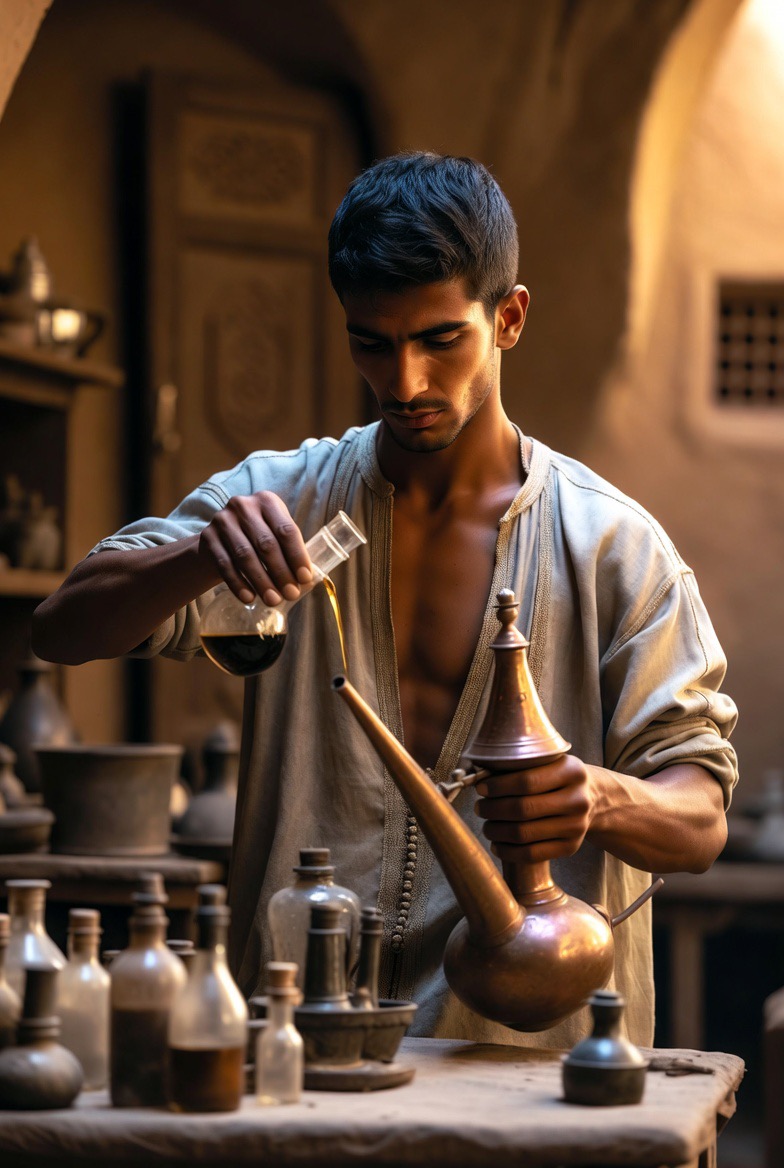
The gesture
Distillation, blending, dosage. The still — the word comes from the Arabic al-inbīq, itself inherited from the Greek ambix — proportions, heating time: the hand learns the patience of transformation.
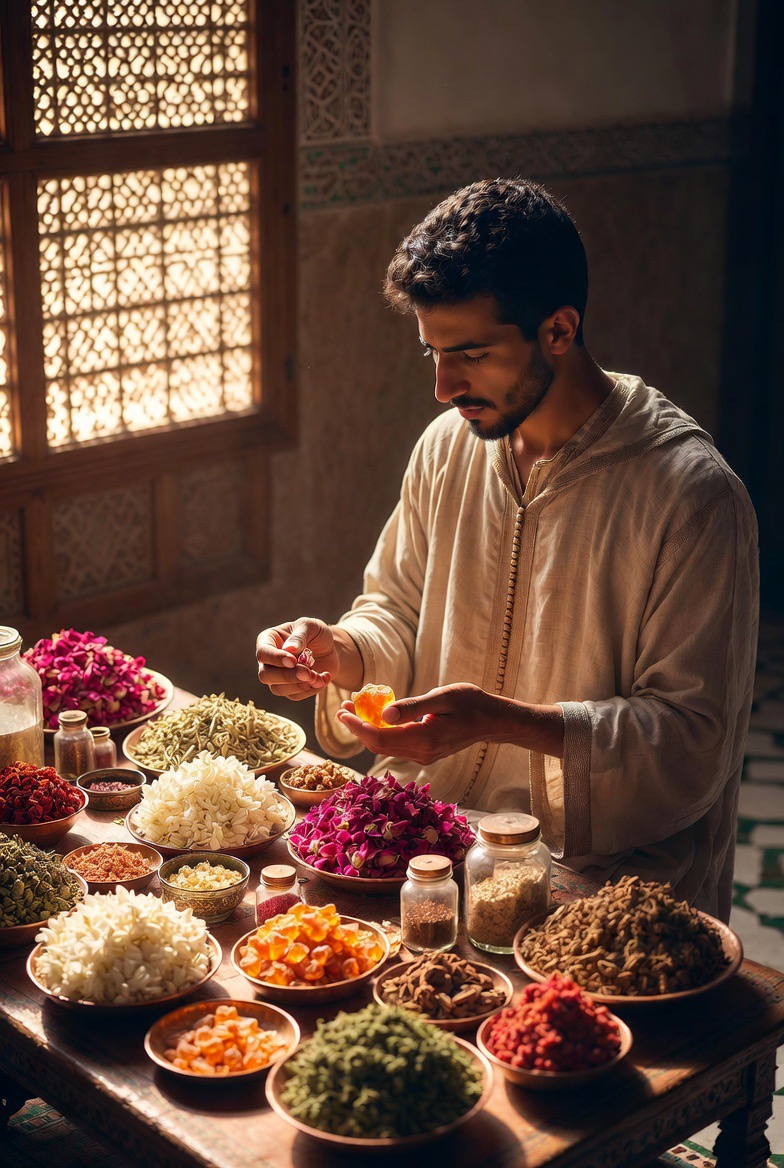
The materials
Rose of Kelaât M’Gouna, orange blossom, jasmine — knowing the plant before the essence. The craft begins in the garden and at the market, not only in the workshop.
The terms on this page are gathered in the glossary of the house.